
The gondola, an iconic symbol of Venice
Venice Tours Blog
The gondola, an iconic symbol of Venice, has undergone many transformations over the centuries. Originally, gondolas were colorful and richly decorated, reflecting the wealth and social status of their owners. It was common to see gondolas in various colors, including red, green, and blue.
From Colorful Luxury to Traditional Black
However, in the 17th century, a decree from the
Venetian Republic required gondolas to be painted black, with the aim of reducing ostentation and creating a more uniform fleet.
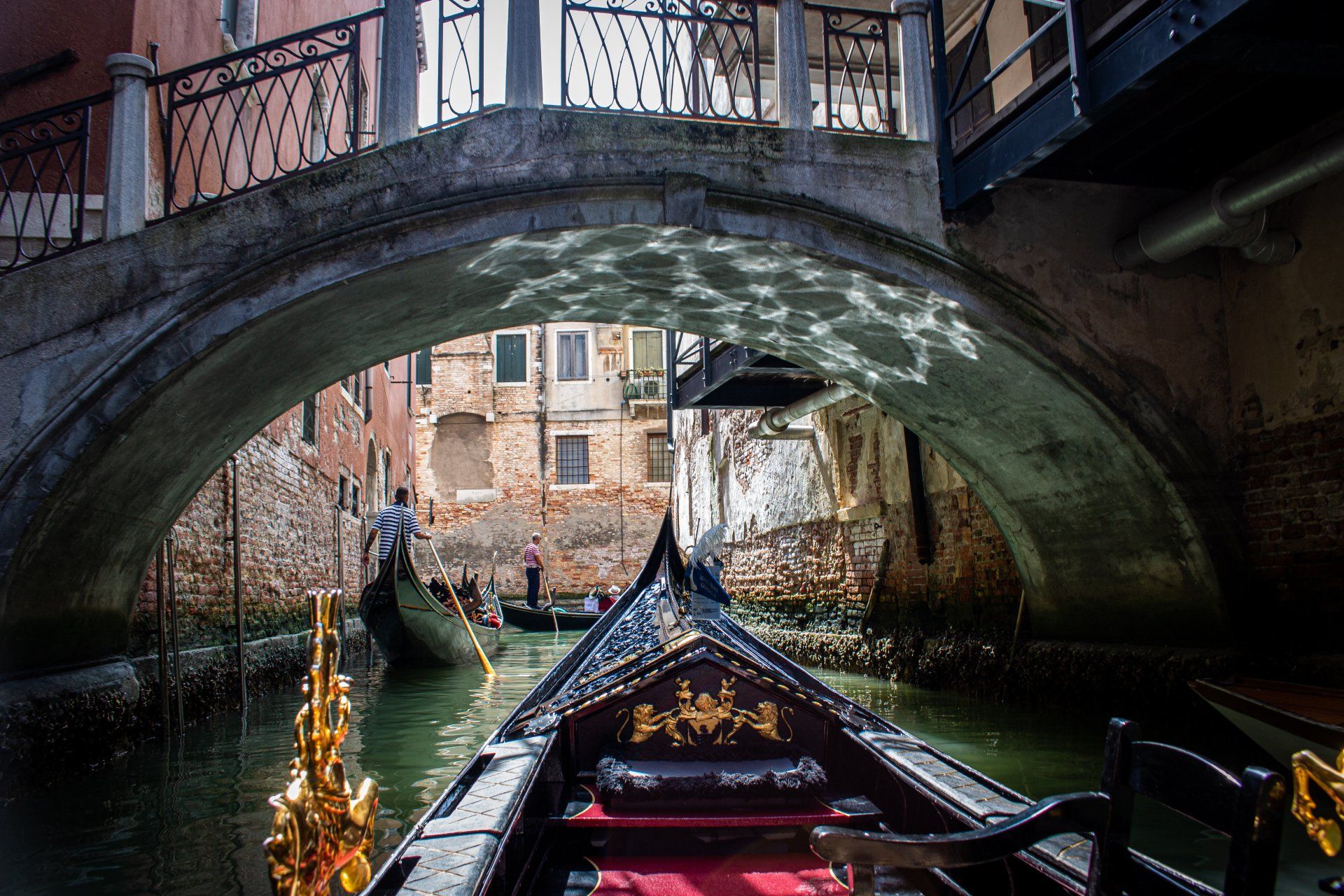
The gondola is not just a means of transport, but a true work of art, built from 280 pieces using eight different types of wood. Over the centuries, its structure has been refined with the introduction of the iron prow and the forcola, improving stability and maneuverability.
A Design Made for Venice’s Narrow Canals
The gondola is about 11 meters long and 1.4 meters wide, dimensions that were standardized in the 19th century. Its unique design allows for precise navigation through Venice’s narrow canals, making the gondola experience unique and unforgettable.
From Two Rowers to the Modern Gondolier
In the past, gondolas were often rowed by two people, a gondolier and an assistant, especially when transporting high-ranking individuals or during regattas.
Today, however, the gondola is usually rowed by a single gondolier, thanks to its asymmetrical shape, which allows it to be maneuvered efficiently with one oar.
A romantic gondola ride on the Grand Canal is one of the most sought-after experiences for visitors to Venice, offering breathtaking views of the city’s historic palaces and iconic bridges.